
Commercial Dumpster Rental
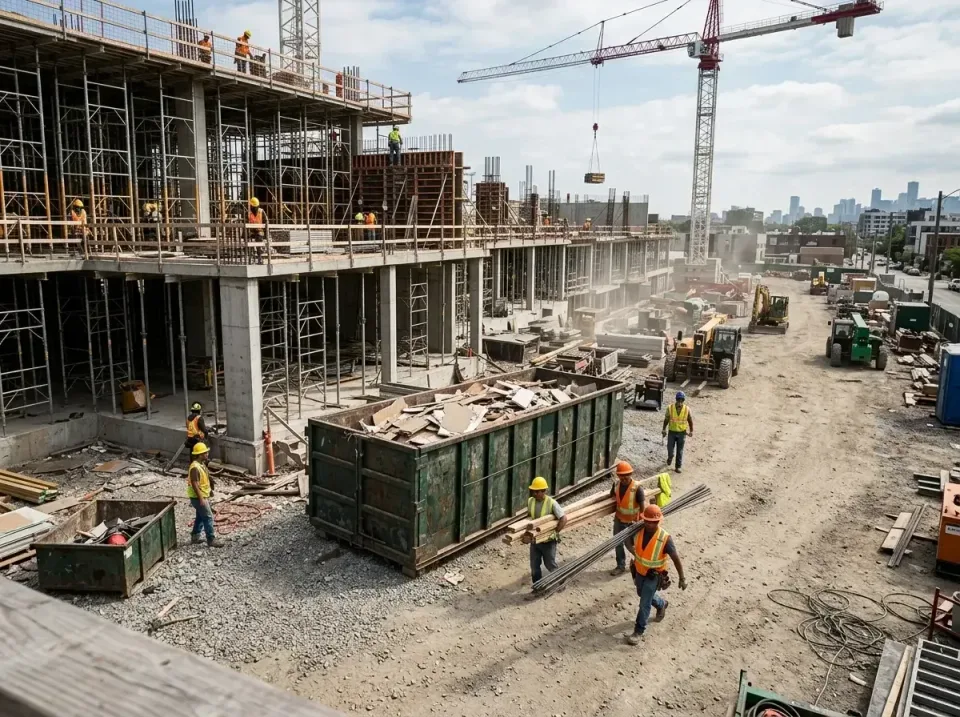
Commercial dumpsters help Freeport contractors, property managers, and builders contain construction debris during active projects.
A dumpster on private property usually avoids public right-of-way rules, but street placement often requires permission. In Freeport, a street permit is commonly needed when placement lasts seven or more days.
Permit confusion can delay delivery, especially when a roll-off dumpster occupies parking space or narrows traffic lanes. Ask which department handles the application before choosing a placement date.
A driveway may avoid that permit, but poor placement can still crack paving or block the roll-off truck. Keep the delivery path clear and confirm the surface can support the container.
Dumpster Rental Guys helps Freeport customers review access, timing, and placement before delivery; broader coverage appears in all service areas.
Street permit: Public placement lasting seven or more days commonly needs a street permit, so verify the local zoning ordinance before delivery.
Weight planning: A roll-off dumpster may include a 2–4 ton load limit, while concrete mixed with prohibited materials can create disposal problems.
Rental timing: A typical rental period runs 7–10 days, so match the service window to demolition, loading, and pickup plans.
Road protection: Driveway protection helps reduce surface damage, but the roll-off truck still needs a clear route and safe placement area.
Disposal records: The transfer station may issue a weight ticket, and a tipping fee or hauling fee can follow material handling and disposal.
A container placed in a public street, alley, sidewalk, or parking lane may require a local right-of-way permit. The permit process can address traffic control, reflective markings, parking restrictions, and protection of pedestrians.
In Freeport, verify street-placement requirements before scheduling a delivery window. A street permit often becomes necessary when the container remains seven or more days, but local rules can differ by roadway and jurisdiction.
Public dumpster placement guidance can help frame the questions to ask, but the issuing city or county office controls the actual approval. Do not assume a contractor’s project permit covers the container.
A permit may still be unnecessary when the roll-off dumpster sits fully on private property. That exception disappears if the container, truck, or loading activity extends into the public right-of-way.
A roll-off truck uses hydraulic container loading and needs enough width, turning room, and overhead clearance. Measure the route from the road to the placement area, including gates, trees, utility lines, and parked vehicles.
Keep 16 feet of overhead clearance for delivery. Narrow access can cause a dry run, meaning the truck arrives but cannot safely place the container, creating delay or a possible charge.
For driveway placement, use driveway protection boards when appropriate, then choose level, firm ground. Public placement changes the permission question, while private placement creates greater concern about paving, drainage, and access.
Do not block fire hydrants, mailboxes, ADA routes, or sight lines. If a roll-off truck cannot reach the planned location, moving the container later may require a second service window.
The load limit concerns weight as well as volume. Mixed debris containing wood, drywall, packaging, and masonry may travel to a transfer station, while clean concrete may require a different disposal route.
A concrete disposal dumpster suits clean concrete and masonry better than a mixed container. Concrete mixed with prohibited materials can be rejected, rerouted, or charged differently at the scale house.
Ask how the provider records the weight ticket and which landfill or construction and demolition debris landfill receives the material. EPA RCRA Subtitle D provides the framework for municipal solid waste disposal, while ASTM D5231 waste characterization supports more careful material classification.
Never place liquids, hazardous waste, asbestos, or other prohibited items in a standard container. Roofing contractors, demolition contractors, and residential remodeling contractors should separate debris before loading.
Start with the permit check, then confirm the placement address, container size, material stream, and requested pickup date. Itemized quotes should identify delivery, pickup, disposal fees, and possible overage charges.
A 10-yard dumpster handles approximately 10 cubic yards, while larger containers suit heavier renovation or construction volumes. Container dimensions vary by provider, so compare the actual footprint rather than relying only on the advertised size.
Keep debris below the top rail and distribute weight evenly. Schedule a swap-out before the container is full if work continues, since overloading can create unsafe hauling conditions or added fees.
Call Dumpster Rental Guys before delivery if a street permit is unclear, access is narrow, concrete is involved, or schedule changes could affect pickup. A short site review can prevent a failed delivery and avoidable rehandling.
A 10-yard dumpster provides approximately 10 cubic yards for compact cleanouts, while commercial projects may need larger containers. Multiple container sizes support residential through commercial work.
Mixed debris and concrete-only loads have different weight handling needs, even when their volumes appear similar. Curbside placement also requires street-access coordination before the truck arrives.
| Option | Best for | Key detail |
|---|---|---|
| 10-yard dumpster | Small residential cleanup | Approximately 10 cubic yards; confirm driveway or curb access |
| 20-yard dumpster | Renovation debris | More room for mixed materials; verify load limits |
| 30- or 40-yard dumpster | Commercial or new construction work | Larger capacity; placement may need street coordination |
| Concrete disposal dumpster | Clean concrete and masonry | Separate heavy materials from mixed debris |
Request an itemized quote covering delivery, pickup, and disposal fees; dumpster service details can help identify questions about container handling.
Measure: Confirm driveway width, container height, turning space, and at least 16 feet of overhead clearance.
Check permission: Verify street-placement requirements with the responsible local office before reserving delivery.
Choose placement: Select level, firm, obstruction-free ground away from hydrants, mailboxes, and accessible paths.
Set timing: Coordinate the delivery window before demolition begins, then schedule pickup before access changes.
Protect materials: Use weather planning to keep loose debris from blowing into traffic or neighboring property.
Load safely: Distribute weight evenly and keep debris below the container rim; never place hazardous waste inside.
Review conditions: Ask about swap-out timing, container access, and any permit documents before the truck arrives. A roll-off delivery checklist can help property management firms organize site preparation.
Typical service ranges show how project size and material affect the budget:
10-yard residential rental: $300–$600, influenced by haul distance and weight; three pickup loads is typical.
20-yard renovation rental: $400–$800, influenced by debris volume and rental duration; approximately 20 cubic yards.
Roofing debris: $350–$750, influenced by tear-off volume and disposal fees.
Concrete load: $400–$900, influenced by tonnage and the inert-material facility.
40-yard construction rental: $600–$1,200, influenced by duration and haul distance.
Commercial recurring service: $500–$1,500, influenced by frequency and container size.
Weight limits remain material- and disposal-site-dependent, and container dimensions vary by provider. Regional permit fees and haul distances can change the final amount. Final quotes vary by location, materials, access, weight, and duration.
A street permit should be settled before the service window, not after the roll-off truck is loaded. Confirm access, material type, and the load limit together because one overlooked detail can cause a dry run charge.
Mixed debris is often the source of avoidable tipping fees. Separate concrete, roofing material, and prohibited items before loading, then request a weight ticket for the disposal record.
Schedule a swap-out before the container reaches the fill line. This keeps the project moving and reduces the chance of an overage charge from overweight or unsafe loading.
Common mistake: Assuming a paid rental automatically includes public-street permission, driveway protection, and every disposal category.
A public-street dumpster may need a local right-of-way permit, especially when placement lasts seven or more days. Private driveway placement can avoid that permission, but driveway damage and blocked truck access remain practical risks.
Separate concrete and asphalt disposal from mixed household debris, and keep prohibited materials out of every container. Basement cleanout services and demolition cleanup often need different loading guidance than a simple residential rental.
Overloaded dumpster surprise charges can include an overage fee of $40–$100 per ton, depending on the agreement and disposal record. Review the load limit, access route, and pickup timing before work begins.
For Freeport, TX projects, send Dumpster Rental Guys the placement address, material type, size estimate, and desired dates. That information supports a clear quote and a permit-focused delivery plan.
Browse all nationwide service options and choose the right fit for your project.
Commercial dumpsters help Freeport contractors, property managers, and builders contain construction debris during active projects.
Homeowners and contractors book Freeport residential dumpsters for renovations, cleanouts, roofing debris, and yard waste.
Homeowners and contractors book Freeport concrete dumpsters for clean slab, masonry, and asphalt removal.
Homeowners, roofing contractors, and property managers book Freeport dumpsters for shingles, underlayment, and roof tear-offs.
Homeowners, landscapers, and property managers book Freeport containers for branches, brush, leaves, and seasonal yard cleanup.
Homeowners and contractors use our Freeport renovation dumpsters for flooring, drywall, cabinets, roofing, and remodeling debris.
Contractors and homeowners book Freeport new construction dumpsters for lumber, drywall, packaging, and job-site debris.
Homeowners, contractors, and property managers book Freeport demolition dumpsters for concrete, wood, drywall, and teardown debris.
Homeowners, contractors, and property managers book roll-off dumpsters for construction debris, cleanouts, renovations, and demolition work in Freeport.
Large construction dumpsters for Freeport homeowners, contractors, and property managers handling major debris loads.
Homeowners, landscapers, and contractors use our Freeport dumpsters for brush, sod, branches, and landscaping debris.
Homeowners and contractors use our 10-yard dumpster in Freeport for compact remodel, cleanout, roofing, and yard debris.
Homeowners and property managers book Freeport garage cleanout dumpsters for household contents, renovation debris, and bulky items.
Homeowners, contractors, and property managers use our Freeport dumpsters for basement contents, renovation debris, and cleanout projects.
Homeowners, contractors, and property managers book Freeport dumpster service for shed tear-down debris and site cleanup.
Homeowners and property managers use Freeport attic cleanout dumpsters for furniture, boxes, insulation, and renovation discards.
Homeowners and contractors book Freeport dumpsters for siding panels, trim, packaging, and related renovation debris.
Homeowners, contractors, and property managers book Freeport dumpsters for carpet, tile, hardwood, and flooring removal debris.
Homeowners and contractors in Freeport use window replacement dumpsters for frames, glass, trim, and related renovation debris.
Homeowners and contractors book Freeport deck demolition dumpsters for lumber, railings, stairs, and mixed construction debris.
Select your region to see local low cost construction dumpster rental providers and cities we cover.
We connect you with trusted local providers in your state or city. Call or email us today.