
Commercial Dumpster Rental
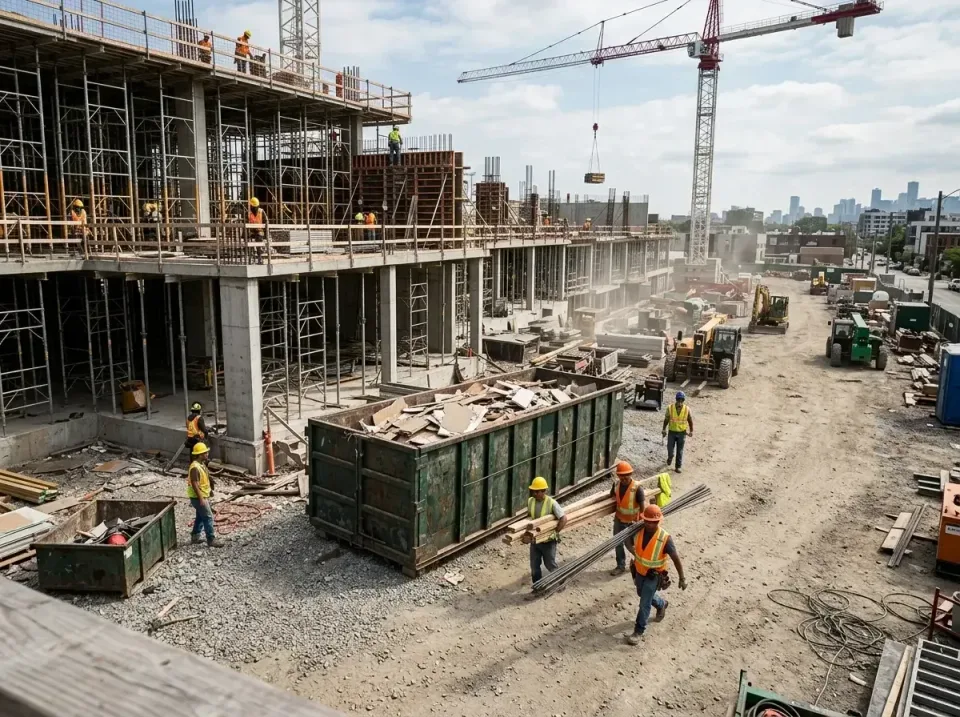
Commercial dumpsters help Freeport contractors, property managers, and builders contain construction debris during active projects.
Will a roll-off dumpster fit your Freeport driveway without damaging the surface? Usually, yes, when placement leaves truck clearance and uses driveway protection.
Landscaping debris belongs in a yard waste dumpster when it contains branches, brush, leaves, and similar organic material. Mixed debris can change disposal handling and may require screening before delivery.
A roll-off truck needs a level placement area and a clear approach. Measure gates, turns, overhead branches, and utility lines before scheduling service.
Dumpster Rental Guys helps Freeport customers plan container access before yard work begins. Broader coverage is available through all service areas for projects outside Texas.
Load limit: Keep branches, brush, and leaves below the container rim so the load limit remains manageable.
Street permit: A street permit may be needed when a container remains in public space for seven or more days.
Swap-out: Schedule a swap-out before the yard cleanup fills the dumpster, especially during multi-property work.
Weight review: If debris exceeds the weight allowance, the disposal site may record the difference on a weight ticket.
Access planning: Leave room for the roll-off truck, and ask about driveway protection before delivery. A transfer station or landfill may classify yard waste differently from mixed debris, affecting the tipping fee. Regional dumpster disposal guidance can help explain why facilities separate organic material from other waste streams.
A yard waste dumpster is suited to branches, brush, leaves, and similar landscaping material. Keep the load separate from household contents, soil-heavy material, treated wood, liquids, and other items that may change the debris classification.
Separating material before loading helps the transfer station direct it to the right processing area. A clean organic load is easier to handle than mixed debris, which may travel to a landfill or another disposal facility.
Landscaping companies and homeowners often use a yard waste dumpster after pruning, storm cleanup, or removing overgrown shrubs. Ask for prohibited-material screening before delivery if the pile includes painted boards, chemical containers, or renovation waste.
A 20-yard dumpster provides renovation waste capacity for larger landscape projects that include substantial brush, small structures, or related cleanup. It can be a practical middle choice when a smaller container would require repeated hauling.
Do not choose by volume alone. Compare load weight versus volume, because wet branches and soil-covered roots can approach disposal limits sooner than dry leaves.
A 20-yard container may suit a large residential property or a landscaping crew working across several sections. For a smaller pruning job, a yard waste dumpster with less capacity can reduce unused space and unnecessary hauling.
Concrete mixed into a yard cleanup should not be treated like ordinary organic debris. A concrete disposal dumpster is intended for clean heavy material, while branches, leaves, and other landscaping waste belong in a different stream.
Concrete can reach a disposal threshold quickly, even when the container looks partly empty. Tell the provider about slabs, pavers, masonry, or asphalt before delivery so the material can be routed toward an appropriate facility.
Keeping concrete separate also reduces sorting problems at the tipping floor. If a project includes a patio removal and brush clearing, separate containers or separate hauling plans may cost less than a rejected mixed load.
Waste Management Inc. grew into the largest US hauler, while Wayne Huizenga was associated with its founding era. That history reflects how container hauling developed around scheduled collection, transfer stations, and disposal routing.
The practical lesson is simple: the container is only one part of the job. The truck route, material category, facility rules, and pickup timing all affect the result.
Dumpster Rental Guys can help Freeport customers describe the pile accurately before ordering. For nationwide industry context, dumpster rental service information shows why providers ask about material type, access, and container use before confirming delivery.
A dumpster keeps debris onsite while work continues, which suits staged pruning, clearing, and construction site cleanup. Junk removal services, such as 1-800-GOT-JUNK?, send crews to load and haul items rather than leaving a container for customer loading.
Choose a dumpster when you want control over loading and timing. Choose crew-based removal when access, lifting, or sorting makes self-loading impractical.
Before choosing either option, identify the material and estimate the pile. That step prevents a yard waste load from being mixed with concrete, hazardous materials, or household contents.
Container dimensions vary by provider, so confirm the footprint before delivery. A demolition debris dumpster may be better for structural tear-outs than a container intended for clean yard waste.
A 10-yard dumpster provides approximately 10 cubic yards for compact debris containment. A 20-yard dumpster provides approximately 20 cubic yards and suits larger brush or renovation-related cleanup.
| Option | Best for | Key detail |
|---|---|---|
| 10-yard dumpster | Small pruning jobs | Approximately 10 cubic yards |
| 20-yard dumpster | Larger yard projects | Approximately 20 cubic yards |
| 30-yard dumpster | Broad property cleanup | More room for staged loading |
| 40-yard dumpster | Major construction cleanup | Approximately 40 cubic yards |
A 30-yard container can suit commercial cleanup, while a 40-yard option fits major builds. Dumpster size guidance can help readers compare capacity with driveway and truck-access limits.
Measure: Confirm driveway width, container height, turning space, and at least 16 feet of overhead clearance.
Schedule: Set the delivery window before pruning or demolition begins, then keep access open.
Place: Choose level, firm, obstruction-free ground away from fire hydrants and mailboxes.
Protect: Ask about driveway protection boards where the roll-off truck will set the container.
Load: Distribute branches and brush evenly, keeping material below the top rail.
Screen: Keep hazardous waste and other prohibited items out of the load.
Pickup: Arrange removal before access changes, and request a swap if the container fills early. A 10-yard dumpster supports compact debris containment, while a 40-yard dumpster handles large construction debris capacity; regional container planning can clarify route and placement questions.
20-yard renovation rental: $400–$800, driven by debris volume and rental duration. This size represents about six pickup loads typically.
Roofing debris: $350–$750, depending on tear-off volume and disposal fees. Roofing material should not be mixed casually with yard waste.
40-yard construction rental: $600–$1,200, influenced by duration and haul distance. It represents about twelve pickup loads typically.
Other project factors: Haul distance, material weight, access, and facility handling can change the quote. Regional disposal rules may also affect the hauling fee or tipping fee.
Final quotes vary by location, materials, access, weight, and duration.
Expert insight:
Confirm debris classification before the service window begins, especially when yard waste includes soil, concrete, or construction material. A weight ticket from the disposal facility can explain a charge more clearly than the container’s appearance.
A dry run can occur when the truck arrives but cannot safely reach or collect the container. Clear gates, branches, vehicles, and wires before delivery.
A 30-yard load equals about nine pickup loads typically, but volume does not replace the load limit. Ask how a weight ticket, tipping fee, hauling fee, or overage charge applies to your material.
Common mistake: Waiting until the dumpster is full to request a swap-out can interfere with the service window.
The safest yard cleanup starts with accurate material separation, measured access, and a container that matches the pile. Keep concrete and asphalt disposal separate from branches, brush, and leaves whenever possible.
Roof replacement debris removal, basement cleanout services, and landscaping work may need different container planning. Mixing those streams can create overloaded dumpster surprise charges or disposal delays.
Concrete mixed with prohibited materials should be disclosed before delivery. That information helps determine whether a dedicated container or another disposal route is appropriate.
For Freeport, TX projects, review all service areas when work crosses service boundaries. Then send Dumpster Rental Guys your material type, estimated volume, placement address, and preferred pickup timing for a practical quote path.
Browse all nationwide service options and choose the right fit for your project.
Commercial dumpsters help Freeport contractors, property managers, and builders contain construction debris during active projects.
Homeowners and contractors book Freeport residential dumpsters for renovations, cleanouts, roofing debris, and yard waste.
Homeowners and contractors book Freeport concrete dumpsters for clean slab, masonry, and asphalt removal.
Homeowners, roofing contractors, and property managers book Freeport dumpsters for shingles, underlayment, and roof tear-offs.
Homeowners, landscapers, and property managers book Freeport containers for branches, brush, leaves, and seasonal yard cleanup.
Homeowners and contractors use our Freeport renovation dumpsters for flooring, drywall, cabinets, roofing, and remodeling debris.
Contractors and homeowners book Freeport new construction dumpsters for lumber, drywall, packaging, and job-site debris.
Homeowners, contractors, and property managers book Freeport demolition dumpsters for concrete, wood, drywall, and teardown debris.
Homeowners, contractors, and property managers book roll-off dumpsters for construction debris, cleanouts, renovations, and demolition work in Freeport.
Large construction dumpsters for Freeport homeowners, contractors, and property managers handling major debris loads.
Homeowners, landscapers, and contractors use our Freeport dumpsters for brush, sod, branches, and landscaping debris.
Homeowners and contractors use our 10-yard dumpster in Freeport for compact remodel, cleanout, roofing, and yard debris.
Homeowners and property managers book Freeport garage cleanout dumpsters for household contents, renovation debris, and bulky items.
Homeowners, contractors, and property managers use our Freeport dumpsters for basement contents, renovation debris, and cleanout projects.
Homeowners, contractors, and property managers book Freeport dumpster service for shed tear-down debris and site cleanup.
Homeowners and property managers use Freeport attic cleanout dumpsters for furniture, boxes, insulation, and renovation discards.
Homeowners and contractors book Freeport dumpsters for siding panels, trim, packaging, and related renovation debris.
Homeowners, contractors, and property managers book Freeport dumpsters for carpet, tile, hardwood, and flooring removal debris.
Homeowners and contractors in Freeport use window replacement dumpsters for frames, glass, trim, and related renovation debris.
Homeowners and contractors book Freeport deck demolition dumpsters for lumber, railings, stairs, and mixed construction debris.
Select your region to see local low cost construction dumpster rental providers and cities we cover.
We connect you with trusted local providers in your state or city. Call or email us today.