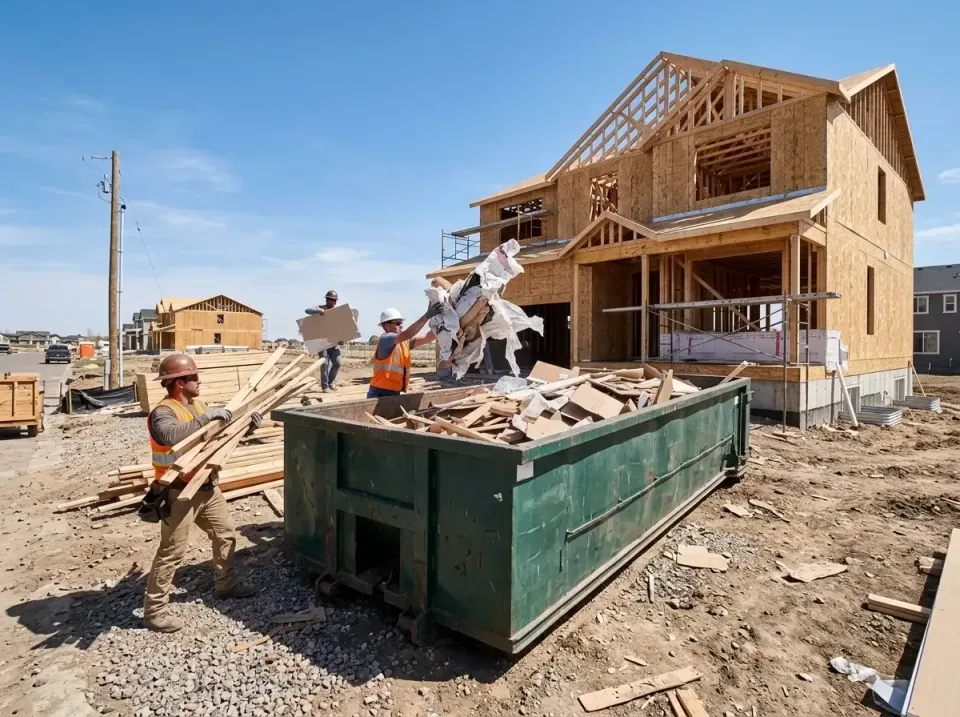
Commercial Dumpster Rental
Commercial dumpsters help Freeport contractors, property managers, and builders contain construction debris during active projects.
Will mixed debris push your container past its weight allowance or leave your driveway damaged? In Freeport, Texas, sorting materials before pickup helps prevent disposal delays and added charges.
Concrete, drywall, wood, and roofing materials do not carry the same disposal risk. A demolition debris dumpster works best when the load stays classified clearly from the start.
Before delivery, compare placement practices with local dumpster service guidance, especially if a roll-off truck must use a sloped driveway. Confirm turning space and protect vulnerable pavement before demolition begins.
A container that cannot fit safely may cause a dry run or delayed pickup. Dumpster Rental Guys can review access, material type, and project timing for customers in Freeport and all service areas.
Load limit: Confirm the container’s load limit before placing dense demolition materials inside.
Overage charge: Ask how an overage charge is calculated and request a weight ticket after disposal.
Dry run: Clear the route first, because a blocked truck path can create a dry run charge.
Debris classification: Separate mixed debris from restricted materials before the load reaches a transfer station.
Weight record: Keep the weight ticket or weight slip so the landfill charge can be matched to your project.
Demolition contractors and residential remodeling contractors should identify the waste stream before ordering a container. Wood, drywall, packaging, roofing shingles, and clean masonry may follow different routes at a construction & demolition debris landfill.
A C&D landfill accepts qualifying building material, while prohibited substances may require separate handling. Ask for prohibited-material screening before delivery, particularly when an older structure could contain asbestos, liquids, or hazardous waste.
The United States Environmental Protection Agency connects municipal disposal practices with RCRA Subtitle D standards. That does not replace local rules, so the debris classification should match the receiving facility’s requirements.
A roll-off truck uses hydraulic container loading, so the driver needs a level approach and enough room to align the container. Narrow gates, low branches, parked vehicles, and soft shoulders can prevent safe delivery.
Measure the driveway entrance, turning area, and overhead route before requesting a remote quote. Dumpster Rental Guys can review photos by phone or online, which helps identify a placement problem before the truck arrives.
Place the container on a firm surface and ask about driveway protection where pavement could crack. Do not assume a larger container fits simply because its cubic capacity suits the debris estimate.
OSHA 29 CFR 1926.850 addresses demolition debris handling and the hazards created during structural removal. OSHA 29 CFR 1926.501 also applies where workers face fall hazards around open edges, elevated work, or unstable surfaces.
The dumpster is not a substitute for a demolition plan, fall protection, or controlled material removal. Keep workers away from unstable walls and prevent debris from sliding toward the container or public walkway.
The United States Department of Transportation governs commercial vehicle operations, while the driver must still receive a clear, stable route. A blocked approach can turn a scheduled delivery into a dry run.
Schedule a swap before the container becomes full, rather than waiting until debris reaches the rim. This keeps the work area open and reduces the chance that a pickup vehicle cannot reach the site.
A construction & demolition debris landfill may weigh the load at a scale house before applying its disposal charge. Ask how the provider handles the scale record, and keep the final documentation with the project file.
Some demolition jobs need more than a dumpster rental. A 1-800-GOT-JUNK? style junk-removal service handles hauling labor differently from a roll-off rental, so compare the service scope before booking.
For Freeport work, give the provider the demolition type, material list, access photos, and desired pickup date. That information supports a practical container recommendation without guessing from debris volume alone.
A 10-yard dumpster holds approximately 10 cubic yards and suits compact demolition or isolated room removal. A 40-yard option fits major builds, but its size can create access and placement problems.
| Option | Best for | Key detail |
|---|---|---|
| 10-yard dumpster | Small demolition areas | Approximately 10 cubic yards; compact debris containment |
| Demolition debris dumpster | Structural tear-outs | Handles ordinary demolition streams after debris classification |
| Roofing debris dumpster | Shingle removal | Keeps roofing tear-offs separate from concrete-heavy loads |
| Concrete disposal dumpster | Clean masonry | Concrete-only loads handle weight differently than mixed debris |
| 40-yard dumpster | Major construction | Better volume for large builds, but dimensions vary by provider |
Before choosing between sizes, dumpster size planning guidance can help clarify why volume and material weight must be considered together.
20-yard renovation rental: $400–$800, influenced by debris volume and rental duration.
Concrete load: $400–$900, mainly reflecting tonnage and the inert-material facility used.
40-yard construction rental: $600–$1,200, with duration and haul distance affecting the total.
Large capacity: A 30-yard dumpster holds approximately 30 cubic yards, while a 40-yard dumpster holds approximately 40 cubic yards.
Typical capacity: A 40-yard container commonly represents about 12 pickup loads, but dense debris can reach weight limits first.
Regional disposal markets, facility distance, and access conditions can change these ranges. Final quotes vary by location, materials, access, weight, and duration.
A 30-yard roll-off dumpster commonly holds about 9 pickup loads, but the tipping fee follows weight rather than appearance. Give the provider a realistic service window so pickup timing matches the demolition sequence.
Ask for the load limit and confirm how the weight ticket will be issued after the landfill visit. That record helps explain a disposal total when mixed debris contains dense material.
A street permit is often needed for rentals lasting 7 or more days. Check the local zoning ordinance before placing the container where it could restrict traffic or public access.
Common mistake: Choosing by volume alone can create an overage charge when concrete or masonry fills the container before it looks full.
Safe demolition disposal starts with accurate debris classification, clear access, and a container suited to the material. Concrete and asphalt disposal usually needs more weight planning than light household contents.
Dumpster Rental Guys can help organize house demolition cleanup or roof replacement debris removal around driveway access and pickup timing. Share the material list, site photos, placement area, and preferred service window.
For Freeport, TX projects, a weight limit of 2–4 tons is typical for included service, while an overage fee may reach $40–$100 per ton. Those figures make early load planning worthwhile.
Request a quote from Dumpster Rental Guys before demolition begins, so the container, delivery route, and disposal plan match the job.

Browse all nationwide service options and choose the right fit for your project.
Commercial dumpsters help Freeport contractors, property managers, and builders contain construction debris during active projects.
Homeowners and contractors book Freeport residential dumpsters for renovations, cleanouts, roofing debris, and yard waste.
Homeowners and contractors book Freeport concrete dumpsters for clean slab, masonry, and asphalt removal.
Homeowners, roofing contractors, and property managers book Freeport dumpsters for shingles, underlayment, and roof tear-offs.
Homeowners, landscapers, and property managers book Freeport containers for branches, brush, leaves, and seasonal yard cleanup.
Homeowners and contractors use our Freeport renovation dumpsters for flooring, drywall, cabinets, roofing, and remodeling debris.
Contractors and homeowners book Freeport new construction dumpsters for lumber, drywall, packaging, and job-site debris.
Homeowners, contractors, and property managers book Freeport demolition dumpsters for concrete, wood, drywall, and teardown debris.
Homeowners, contractors, and property managers book roll-off dumpsters for construction debris, cleanouts, renovations, and demolition work in Freeport.
Large construction dumpsters for Freeport homeowners, contractors, and property managers handling major debris loads.
Homeowners, landscapers, and contractors use our Freeport dumpsters for brush, sod, branches, and landscaping debris.
Homeowners and contractors use our 10-yard dumpster in Freeport for compact remodel, cleanout, roofing, and yard debris.
Homeowners and property managers book Freeport garage cleanout dumpsters for household contents, renovation debris, and bulky items.
Homeowners, contractors, and property managers use our Freeport dumpsters for basement contents, renovation debris, and cleanout projects.
Homeowners, contractors, and property managers book Freeport dumpster service for shed tear-down debris and site cleanup.
Homeowners and property managers use Freeport attic cleanout dumpsters for furniture, boxes, insulation, and renovation discards.
Homeowners and contractors book Freeport dumpsters for siding panels, trim, packaging, and related renovation debris.
Homeowners, contractors, and property managers book Freeport dumpsters for carpet, tile, hardwood, and flooring removal debris.
Homeowners and contractors in Freeport use window replacement dumpsters for frames, glass, trim, and related renovation debris.
Homeowners and contractors book Freeport deck demolition dumpsters for lumber, railings, stairs, and mixed construction debris.
Select your region to see local low cost construction dumpster rental providers and cities we cover.
We connect you with trusted local providers in your state or city. Call or email us today.