Commercial Dumpster Rental
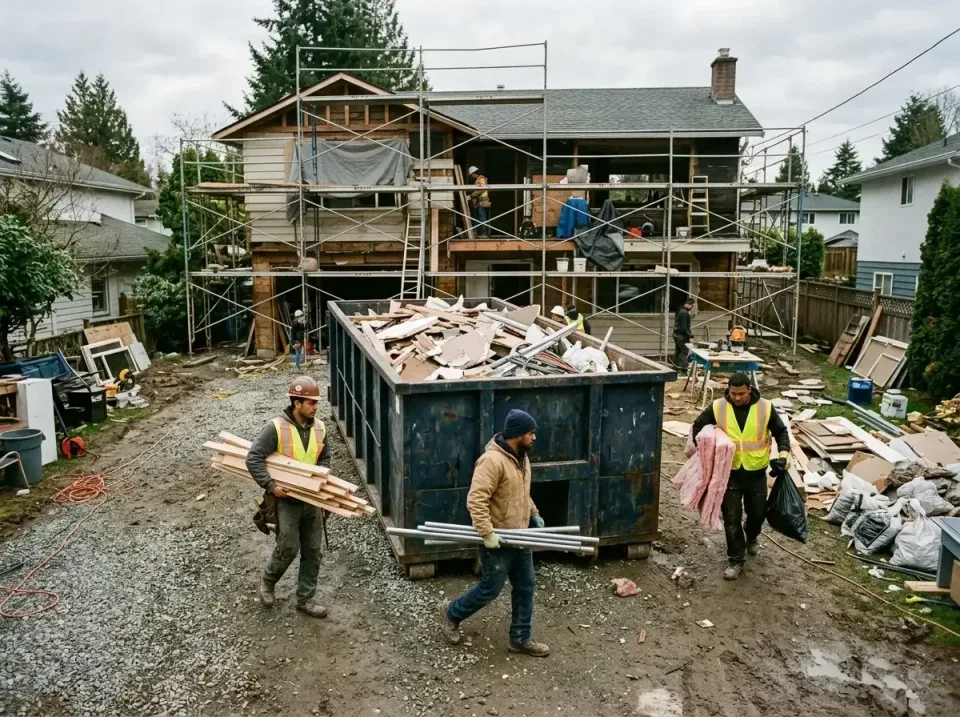
Commercial dumpsters help Freeport contractors, property managers, and builders contain construction debris during active projects.
Worried that prohibited materials could cause a rejected load or surprise fee? A roll-off dumpster accepts many construction materials, but mixed debris must exclude hazardous waste, liquids, asbestos, and other restricted items.
In Freeport, Texas, sort paint, fuels, chemicals, batteries, and pressurized containers before delivery. Those materials can require separate handling through a transfer station or approved disposal program.
A roll-off truck also needs a clear approach, firm placement area, and enough turning room. Narrow access can create a dry run charge if the driver cannot safely position the container.
Keep concrete separate from mixed debris because heavy loads can exceed the container’s weight allowance quickly. Construction disposal guidance can help contractors recognize common material-routing differences before loading begins.
Tipping fee: Ask how debris classification affects the tipping fee before placing concrete, soil, or masonry inside mixed debris.
Capacity: A 30-yard container holds about 9 pickup loads typically, but volume does not replace a safe load limit.
Access: Narrow access blocks safe delivery when the roll-off truck lacks turning space, overhead clearance, or a firm placement area.
Concrete: Keep concrete separate from prohibited materials because contamination can redirect the load to a different facility.
Overage charge: Overloaded dumpster surprise charges often follow excess weight, with the scale house recording a weight ticket before disposal.
A construction & demolition debris landfill may accept clean building materials while refusing liquids or hazardous waste. Waste-sorting practices can help crews keep recyclable material away from the wrong tipping floor.
The usual prohibited items include asbestos, solvents, fuels, pesticides, motor oil, medical waste, batteries, propane cylinders, and liquids. Do not place these materials in a new construction dumpster with wood, drywall, or packaging.
State landfill bans can apply even when a material seems small or harmless. EPA RCRA Subtitle D guides municipal solid waste disposal, while EPA Asbestos NESHAP, 40 CFR Part 61, Subpart M, addresses asbestos handling and removal.
Concrete, brick, and asphalt are often accepted only as clean heavy materials. If concrete is mixed with prohibited materials, the load may need different routing, inspection, or a concrete disposal dumpster.
A construction & demolition debris landfill handles building waste differently from a municipal solid waste landfill. At the scale house, the load receives a weight slip, and the facility may charge a higher tipping fee for contamination or excess weight.
Mixed construction debris means wood, drywall, and packaging are combined. Roofing shingles can belong in a roofing debris dumpster, while clean masonry may be better suited to a concrete-only container.
Dumpsters.com operates as a national broker, but local disposal decisions still depend on the receiving transfer station and its acceptance rules. Ask for prohibited-material screening before demolition begins.
A 40-yard dumpster provides large construction debris capacity for major builds, but it does not make heavy material unlimited. A 40-yard construction rental commonly ranges from $600–$1,200, with duration and haul distance affecting the quote.
The load limit concerns weight as well as volume. Keep debris below the top rail, distribute heavy material across the floor, and schedule a swap-out before the container becomes unsafe.
A new construction dumpster suits general construction contractors handling steady wood, drywall, and packaging waste. Roofing contractors, demolition contractors, and residential remodeling contractors may need separate containers for cleaner disposal streams.
Measure driveway width, truck clearance, overhead wires, and turning space before delivery. A roll-off truck uses hydraulic container loading, so the driver needs a straight, stable approach and at least 16 feet of overhead clearance.
Place the container on level, firm ground and use driveway protection boards where surface damage is a concern. Do not block fire hydrants, mailboxes, ADA routes, or emergency access.
Street placement may require a local right-of-way permit or a local zoning ordinance review. OSHA 29 CFR 1926.850 covers demolition debris handling, and OSHA 29 CFR 1926.501 addresses fall protection around active work areas.
For a one-acre or larger disturbed site, the Construction General Permit may also affect project planning. Confirm the delivery window before demolition, then tell Dumpster Rental Guys about access changes before pickup.
Size affects volume, but prohibited-material rules apply to every container. A 10-yard dumpster measures approximately 10 cubic yards, while a 20-yard option provides approximately 20 cubic yards.
A 30-yard dumpster offers approximately 30 cubic yards for larger mixed projects. A 40-yard dumpster provides approximately 40 cubic yards for major construction, though weight limits remain material-dependent.
| Option | Best for | Key detail |
|---|---|---|
| 10-yard dumpster | Compact repairs | Approximately 10 cubic yards |
| 20-yard dumpster | Renovation debris | Approximately 20 cubic yards |
| 30-yard dumpster | Larger remodeling | Approximately 30 cubic yards |
| 40-yard dumpster | Major builds | Approximately 40 cubic yards |
Container selection guidance can help explain why compact projects and major builds require different capacity planning.
Measure: Confirm width, height, turning space, and 16 feet of overhead clearance before requesting delivery.
Schedule: Set the delivery window before demolition begins, especially for construction site cleanup.
Prepare: Place the container on level, firm, obstruction-free ground, using driveway protection where needed.
Sort: Keep hazardous waste and other prohibited items out of the load; the Construction & Demolition Recycling Association promotes source separation.
Load: Distribute weight evenly and keep debris below the top rail.
Check: Keep fire hydrants, mailboxes, and accessible paths open, while checking the Construction General Permit threshold for one-acre disturbance.
Plan pickup: Schedule a swap before the container fills and protect loose materials from wind.
10-yard residential rental: $300–$600, commonly suited to about 3 pickup loads; haul distance and weight affect the range.
Roofing debris: $350–$750, with tear-off volume and disposal fees driving the price.
Concrete load: $400–$900, depending on tonnage and the inert-material facility.
20-yard renovation rental: $400–$800, influenced by debris volume and rental duration.
Commercial recurring service: $500–$1,500, based on frequency and container size.
Regional transfer-station rules can change accepted materials, haul distance, and disposal fees. Final quotes vary by location, materials, access, weight, and duration.
A clean load is easier to route than a cheap-looking mixed load containing one prohibited item. Photograph unusual materials before loading and ask where they should go.
The driver’s service window depends on safe access, not just the appointment time. Share driveway restrictions early so the load limit and placement plan match the site.
A weight ticket documents the disposal scale result and can explain an overage charge. A dry run may occur when blocked access prevents the roll-off truck from reaching the placement area.
Common mistake: treating a 7–10 day rental period as permission to leave prohibited items inside the container.
Dumpster Rental Guys can review the material list, access route, and expected swap-out timing before delivery.
The safest approach is simple: identify banned items first, separate heavy materials, and confirm access before ordering. A 40-yard container can hold about 12 pickup loads typically, but the roll-off truck still needs a clear route.
For roof replacement debris removal, keep shingles separate from liquids and hazardous waste. Garage cleanout services may also reveal batteries, cleaners, or household chemicals that require another disposal path.
Pickup delayed after schedule changes is avoidable when you update the service window early. If the truck cannot reach the site, a prepared access plan can prevent a dry run.
Dumpster Rental Guys serves Freeport, TX and broader service areas. Send the material list, placement details, and preferred pickup timing to request a practical quote.

Browse all nationwide service options and choose the right fit for your project.
Commercial dumpsters help Freeport contractors, property managers, and builders contain construction debris during active projects.
Homeowners and contractors book Freeport residential dumpsters for renovations, cleanouts, roofing debris, and yard waste.
Homeowners and contractors book Freeport concrete dumpsters for clean slab, masonry, and asphalt removal.
Homeowners, roofing contractors, and property managers book Freeport dumpsters for shingles, underlayment, and roof tear-offs.
Homeowners, landscapers, and property managers book Freeport containers for branches, brush, leaves, and seasonal yard cleanup.
Homeowners and contractors use our Freeport renovation dumpsters for flooring, drywall, cabinets, roofing, and remodeling debris.
Contractors and homeowners book Freeport new construction dumpsters for lumber, drywall, packaging, and job-site debris.
Homeowners, contractors, and property managers book Freeport demolition dumpsters for concrete, wood, drywall, and teardown debris.
Homeowners, contractors, and property managers book roll-off dumpsters for construction debris, cleanouts, renovations, and demolition work in Freeport.
Large construction dumpsters for Freeport homeowners, contractors, and property managers handling major debris loads.
Homeowners, landscapers, and contractors use our Freeport dumpsters for brush, sod, branches, and landscaping debris.
Homeowners and contractors use our 10-yard dumpster in Freeport for compact remodel, cleanout, roofing, and yard debris.
Homeowners and property managers book Freeport garage cleanout dumpsters for household contents, renovation debris, and bulky items.
Homeowners, contractors, and property managers use our Freeport dumpsters for basement contents, renovation debris, and cleanout projects.
Homeowners, contractors, and property managers book Freeport dumpster service for shed tear-down debris and site cleanup.
Homeowners and property managers use Freeport attic cleanout dumpsters for furniture, boxes, insulation, and renovation discards.
Homeowners and contractors book Freeport dumpsters for siding panels, trim, packaging, and related renovation debris.
Homeowners, contractors, and property managers book Freeport dumpsters for carpet, tile, hardwood, and flooring removal debris.
Homeowners and contractors in Freeport use window replacement dumpsters for frames, glass, trim, and related renovation debris.
Homeowners and contractors book Freeport deck demolition dumpsters for lumber, railings, stairs, and mixed construction debris.
Select your region to see local low cost construction dumpster rental providers and cities we cover.
We connect you with trusted local providers in your state or city. Call or email us today.