Commercial Dumpster Rental
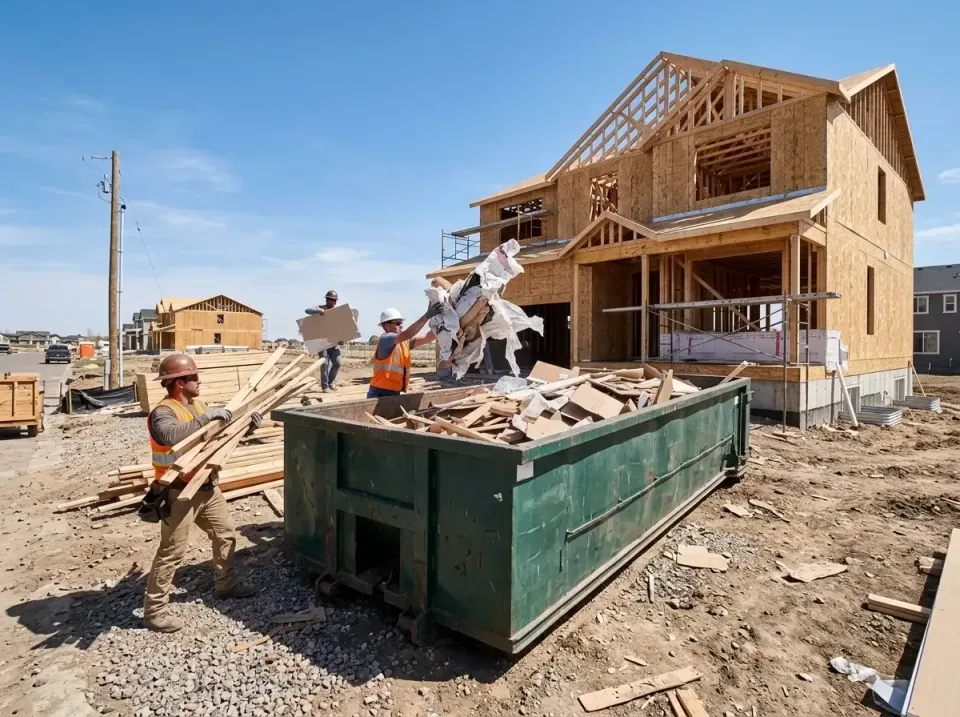
Commercial dumpsters help Freeport contractors, property managers, and builders contain construction debris during active projects.
Can a dumpster sit beside your building without damaging the driveway or creating permit trouble? Usually, yes, if the placement area is firm and street permission is confirmed first.
In Freeport, Texas, driveway protection boards help spread the container’s weight and reduce surface damage. The roll-off truck still needs a clear approach, level ground, and room to lower the box safely.
Street placement creates a separate issue because permit confusion can delay delivery. Before reserving curb space, check local dumpster placement guidance for right-of-way requirements and building access concerns.
Dumpster Rental Guys can review access, placement, and project timing before delivery. The same planning supports customers across all service areas when buildings, sidewalks, or public streets limit placement options.
Placement: A roll-off dumpster needs driveway protection when concentrated weight could crack or mark the surface.
Materials: Separate mixed debris before loading, because concrete and other heavy materials can exceed the container’s load limit quickly.
Access: Confirm truck clearance before delivery, since a blocked route can create a dry run and delay the service window.
Permits: A street permit may be needed for curbside placement, especially when the container remains seven or more days.
Timing: Schedule a swap-out before the dumpster is full, reducing overflow risks and possible overage charges; a transfer station may weigh the load at its scale house.
When a roll-off dumpster is overloaded, the disposal facility may issue a weight ticket and apply a tipping fee. Dumpster disposal practices can help explain why load limits and debris separation matter near occupied buildings.
A dumpster should sit on level, firm ground with enough clearance for people, vehicles, and emergency access. Driveway placement and street placement involve different permissions, so do not assume a private driveway can substitute for a blocked curb.
For a residential dumpster rental, measure the driveway clearance, overhead wires, tree branches, and turning space before booking. A roofing debris dumpster may work well beside a home, while a new construction dumpster may require a larger staging area. The container dimensions vary by provider, so confirm the footprint rather than relying on a size name alone.
A local right-of-way permit may control public-street container placement. Public-street dumpster permitting resources can illustrate the type of authorization cities may require before equipment occupies a roadway.
A roll-off truck uses hydraulic container loading, which means the driver needs a straight approach and room to set the box down. Narrow gates, parked cars, low branches, or utility lines can stop delivery before the container reaches the intended location.
Keep 16 feet of overhead clearance for delivery and never block fire hydrants, mailboxes, or accessible paths. If the truck cannot reach the site, the result may be a dry run charge rather than a completed delivery. Driveway protection boards can reduce surface damage, but they cannot correct unstable soil or inadequate turning space.
DIY hauling often means repeated trips in a pickup truck, while dumpster rental provides onsite containment. For demolition debris, that difference can keep loose materials away from entrances and reduce traffic around an occupied building.
Volume and weight are separate decisions. A container may look half full while concrete, brick, or roofing materials already approach its load limit.
Mixed debris such as wood, drywall, and packaging follows a different handling path than concrete-only material. A construction and demolition debris landfill, C&D recycling facility, or transfer station may route material according to its classification. Ask how a weight ticket or weight slip is calculated before loading dense debris.
Do not place hazardous waste, liquids, or asbestos in a general container. EPA RCRA Subtitle D addresses municipal solid-waste disposal standards, while EPA Asbestos NESHAP, 40 CFR Part 61, Subpart M, applies to regulated asbestos work. OSHA 29 CFR 1926.850 also addresses demolition debris handling, so suspected asbestos requires professional assessment before removal.
Coordinate the delivery window before demolition begins and keep debris below the top rail. A filled container can obstruct workers, narrow a fire route, and prevent safe pickup.
Schedule pickup before access changes, such as a gate installation, parked equipment arrival, or temporary fencing. If the project runs longer, arrange a swap-out or extended service plan instead of piling debris beside the building.
The Construction General Permit uses a one-acre disturbance threshold for certain construction activity, but it does not replace a local right-of-way permit. In Freeport, ask Dumpster Rental Guys to review the placement surface, truck route, material type, and pickup timing before requesting a quote.
Size should match both debris volume and the available fire-safe placement area. A commercial dumpster rental may suit repeated construction work, but smaller residential jobs often need less staging space.
A 10-yard dumpster holds approximately 10 cubic yards, while a 20-yard option holds approximately 20 cubic yards. Container dimensions vary by provider, so verify access before choosing by volume alone.
| Option | Best for | Key detail |
|---|---|---|
| 10-yard dumpster | Small residential cleanup | Approximately 10 cubic yards; compact placement |
| 20-yard dumpster | Home renovation debris | Approximately 20 cubic yards; renovation capacity |
| 30-yard dumpster | Commercial cleanup | Approximately 30 cubic yards; larger staging needs |
| 40-yard dumpster | Major construction | Approximately 40 cubic yards; requires careful truck access |
A 10-yard versus 40-yard choice is mainly compact work versus major builds. Dumpster size planning examples can help compare footprint concerns, although placement rules still depend on the local site.
Measure: Confirm width, height, turning space, and at least 16 feet of overhead clearance before delivery.
Choose ground: Set the demolition debris dumpster on level, firm, obstruction-free ground.
Protect surfaces: Place plywood or composite protection beneath the container when driveway conditions warrant it.
Coordinate delivery: Set the delivery window before demolition begins, and remove vehicles from the truck path.
Check permission: Verify street-placement requirements and obtain a street permit before using public curb space.
Load safely: Distribute weight evenly, keep debris below the top rail, and exclude hazardous waste.
Plan removal: Schedule a swap before the container fills, and protect loose materials from wind during the rental.
A 10-yard residential rental commonly costs $300–$600, with haul distance and weight affecting the quote. That size holds about 3 pickup loads typically.
Roofing debris commonly runs $350–$750 because tear-off volume and disposal fees change the total. A 30-yard container holds about 9 pickup loads typically, making it useful when roof work shares space with other debris.
Commercial recurring service may cost $500–$1,500, based on frequency and container size. Local Freeport pricing can differ from other Texas markets because hauling distance and disposal facilities vary.
Ask for an itemized quote covering delivery, pickup, disposal fees, access, and duration. Final quotes vary by location, materials, access, weight, and duration.
A driveway is not automatically a safe placement area. Confirm the surface, truck route, and debris classification before the service window begins, especially beside an occupied building.
A typical rental period is 7–10 days, but access changes can make pickup harder before that period ends.
Treat the tipping fee, hauling fee, and load limit as separate quote questions. A weight ticket can show why an overage charge applies when dense materials exceed the included allowance.
Use driveway protection when the surface is vulnerable, and keep mixed debris within the approved material stream. If concrete or masonry will dominate, ask about a separate container before loading.
Common mistake: Waiting until the box is full to request a swap can create an unsafe pile and a missed service window.
Safe placement starts with a level surface, clear truck access, and permission for any public-street location. Those checks help prevent driveway damage, blocked routes, and delivery problems near buildings.
A 40-yard container holds about 12 pickup loads typically, but its larger footprint may be unsuitable when narrow access blocks safe delivery. Smaller containers can be a better fit for roof replacement debris removal or garage cleanout services.
Pickup can also be delayed after schedule changes, so tell the provider before gates, fencing, or equipment restrict access. Dumpster Rental Guys can review your Freeport, TX site and match the container to the material and route.
Measure the placement area, identify the debris stream, and request a quote before work begins. That gives you a practical path for compliant dumpster service.

Browse all nationwide service options and choose the right fit for your project.
Commercial dumpsters help Freeport contractors, property managers, and builders contain construction debris during active projects.
Homeowners and contractors book Freeport residential dumpsters for renovations, cleanouts, roofing debris, and yard waste.
Homeowners and contractors book Freeport concrete dumpsters for clean slab, masonry, and asphalt removal.
Homeowners, roofing contractors, and property managers book Freeport dumpsters for shingles, underlayment, and roof tear-offs.
Homeowners, landscapers, and property managers book Freeport containers for branches, brush, leaves, and seasonal yard cleanup.
Homeowners and contractors use our Freeport renovation dumpsters for flooring, drywall, cabinets, roofing, and remodeling debris.
Contractors and homeowners book Freeport new construction dumpsters for lumber, drywall, packaging, and job-site debris.
Homeowners, contractors, and property managers book Freeport demolition dumpsters for concrete, wood, drywall, and teardown debris.
Homeowners, contractors, and property managers book roll-off dumpsters for construction debris, cleanouts, renovations, and demolition work in Freeport.
Large construction dumpsters for Freeport homeowners, contractors, and property managers handling major debris loads.
Homeowners, landscapers, and contractors use our Freeport dumpsters for brush, sod, branches, and landscaping debris.
Homeowners and contractors use our 10-yard dumpster in Freeport for compact remodel, cleanout, roofing, and yard debris.
Homeowners and property managers book Freeport garage cleanout dumpsters for household contents, renovation debris, and bulky items.
Homeowners, contractors, and property managers use our Freeport dumpsters for basement contents, renovation debris, and cleanout projects.
Homeowners, contractors, and property managers book Freeport dumpster service for shed tear-down debris and site cleanup.
Homeowners and property managers use Freeport attic cleanout dumpsters for furniture, boxes, insulation, and renovation discards.
Homeowners and contractors book Freeport dumpsters for siding panels, trim, packaging, and related renovation debris.
Homeowners, contractors, and property managers book Freeport dumpsters for carpet, tile, hardwood, and flooring removal debris.
Homeowners and contractors in Freeport use window replacement dumpsters for frames, glass, trim, and related renovation debris.
Homeowners and contractors book Freeport deck demolition dumpsters for lumber, railings, stairs, and mixed construction debris.
Select your region to see local low cost construction dumpster rental providers and cities we cover.
We connect you with trusted local providers in your state or city. Call or email us today.